On July 2, 2026, the North Carolina Senate adopted the conference report on House Bill 328 by a 37–6 vote, ending a legislative saga that had the bill left for dead in April when the House declined to concur with the Senate’s version. The compromise that emerged does two things on two very different clocks:
- July 15, 2026: a 21+ age limit on the sale of intoxicating hemp products takes effect statewide.
- November 12, 2026: North Carolina law adopts the new federal definition of hemp — the total-THC standard and the 0.4 milligram per container cap — on the same day the federal rule bites.
Most of the coverage has focused on the November date, and understandably so: it is the cliff that threatens to make roughly 95% of today’s hemp-derived cannabinoid products unlawful, in North Carolina and everywhere else. We covered the federal mechanics in our intoxicating hemp ban compliance-cliff analysis, and nothing since has moved the deadline: as of this writing, no delay legislation has cleared either chamber of Congress, and the industry’s proposed rescue framework — the “Goodness of Hemp Act” — remains a proposal, not a law.
But it is the July date that deserves more attention than it is getting, because it is about to create a brand-new population of identity-data collectors overnight.
Hemp retail is about to start checking IDs — everywhere
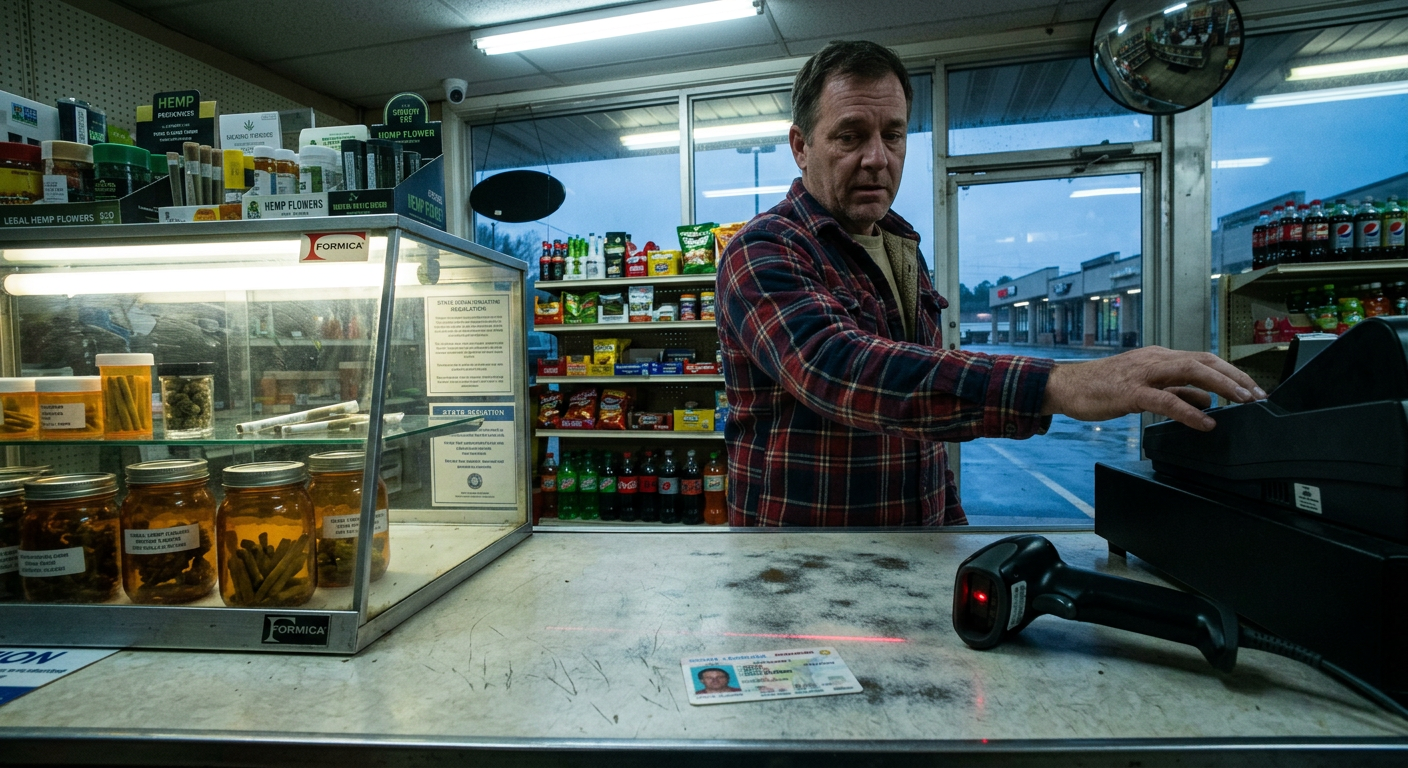
Dispensaries have checked IDs since the day they opened; it is the most basic condition of a cannabis license. Hemp retail grew up under no such requirement in most states. Delta-8 gummies and THCA flower have been sold in North Carolina by vape shops, smoke shops, gas stations, and online storefronts that have never verified a customer’s age in any systematic way, never selected an ID-scanning vendor, and never written a data-retention policy — because they never had to.
On July 15, in North Carolina, they have to. And North Carolina is not alone: the state-by-state scramble triggered by the federal redefinition is producing age-gating and registration requirements across the map. Ohio went further with Senate Bill 56’s categorical ban on intoxicating hemp products back in December — now facing a signature drive by Ohioans for Cannabis Choice to put a repeal on the November 2026 ballot — and states in between are landing on 21+ age limits as the politically available middle ground.
Here is the problem. When a regulator says “verify age,” the path of least resistance for a small retailer is an ID scanner or an online age-verification service with default settings. And the default settings, in most of that industry, are scan and store: capture the license image, upload it, keep it indefinitely. The retailer believes the archive is the compliance. It is not — it is the liability.
The cannabis industry paid dearly to learn this. The Cannaleaks exposure put 985,000 cannabis-club members’ passports and selfies on the open internet because an age-verification pipeline retained everything it touched. STIIIZY’s breach was as damaging as it was because driver’s license numbers and medical card details were sitting behind a compromised point-of-sale. The lesson, which we distilled in Verify, Don’t Store, is that age verification is a moment, not a database: confirm the customer is 21, log that the check happened, and keep nothing an attacker would want.
Hemp retail is about to skip straight past that lesson unless someone hands it to them.
What a North Carolina hemp retailer should do before July 15
If you sell consumable hemp products in North Carolina, you have days, not months. The good news is that a defensible setup is genuinely simple:
- Read the actual requirement before buying anything. The obligation is to not sell to anyone under 21 and to be able to demonstrate diligence. It is not to build an archive of customer identity documents. Write down what HB 328 and any implementing guidance actually require you to retain — and build to that, not to a vendor’s defaults.
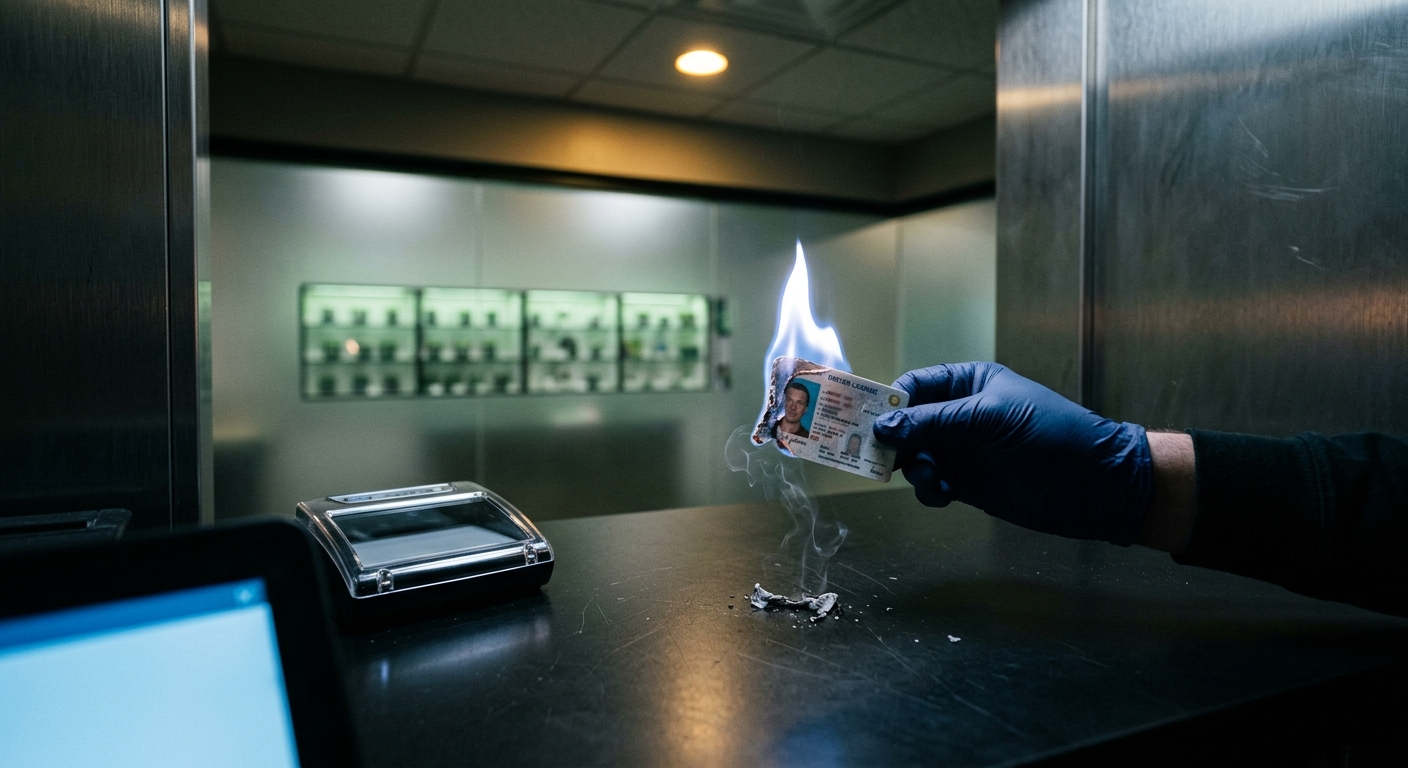
- Configure scan-and-discard from day one. If you deploy an ID scanner, set it to return pass/fail with a minimal log entry — timestamp, terminal, document type, “age confirmed” — and to discard the image. You are starting from a blank slate; a blank slate is the easiest place in the world to get retention right.
- Interrogate online age-verification vendors. E-commerce hemp sellers will reach for third-party verification services. Ask where the data is stored, whether it is encrypted, when it is deleted, and whether the vendor has passed an independent security assessment. The Cannaleaks clubs outsourced verification too. Outsourcing the check does not outsource the breach headline.
- Do not bolt identity data onto your marketing stack. The temptation is to treat the new ID check as a customer-acquisition event — capture the birthday, feed the loyalty program. Every state privacy law trend we track in our state privacy law checklist is moving against exactly that. Keep the compliance record and the marketing database separate.
- Train the counter staff on the failure mode. The rule is checked at the register. Staff should know what an acceptable ID is, what the scanner logs, and — just as important — that photographing or photocopying IDs “to be safe” is the opposite of safe.
November is a data problem too
The July age gate is the near-term deadline; the November cliff is the existential one. If Congress does not act, a large share of North Carolina’s hemp retailers will be holding inventory they cannot legally sell — and many will close, sell, or pivot.
Businesses that die suddenly leave data behind. We documented this pattern internationally in our analysis of regulatory whiplash and orphaned data: when the rules flip and operators shut down, customer databases, ID archives, and vendor accounts get abandoned — unpatched, unpaid-for, and unwatched — until someone finds them. A hemp sector that spends July–November building customer identity databases and then partially collapses on November 12 is a preassembled orphaned-data incident.
That is one more argument for minimal collection now. A retailer that closes in November holding nothing but pass/fail age logs leaves nothing behind worth breaching. A retailer that closes holding four months of scanned licenses leaves a time bomb.
If you are a cannabis operator watching from the licensed side of the line, the November date cuts the other way: displaced hemp consumers and — in some states — displaced hemp businesses will move toward the licensed market. Expect more customers, more acquisition targets, and more inherited systems. Diligence on an acquired hemp brand should now include the question: what identity data did you collect after your state’s age-gate took effect, and where is it?
The bottom line
The intoxicating-hemp reckoning is arriving in two waves, and the first one lands in North Carolina on July 15. It looks like a simple age-check rule. It is actually the moment thousands of retailers with no compliance history begin collecting the single most breach-sensitive category of retail data — government identity documents — under time pressure, with default-configured tools.
The cannabis industry already ran this experiment and published the results: THSuite, STIIIZY, Cannaleaks. Hemp retail gets the rare chance to start from zero and get it right. Verify. Log the fact. Store nothing you don’t have to. And if November takes the business out from under you anyway, leave nothing behind that can hurt the customers who kept you going.
This article is provided for informational purposes only and does not constitute legal advice.