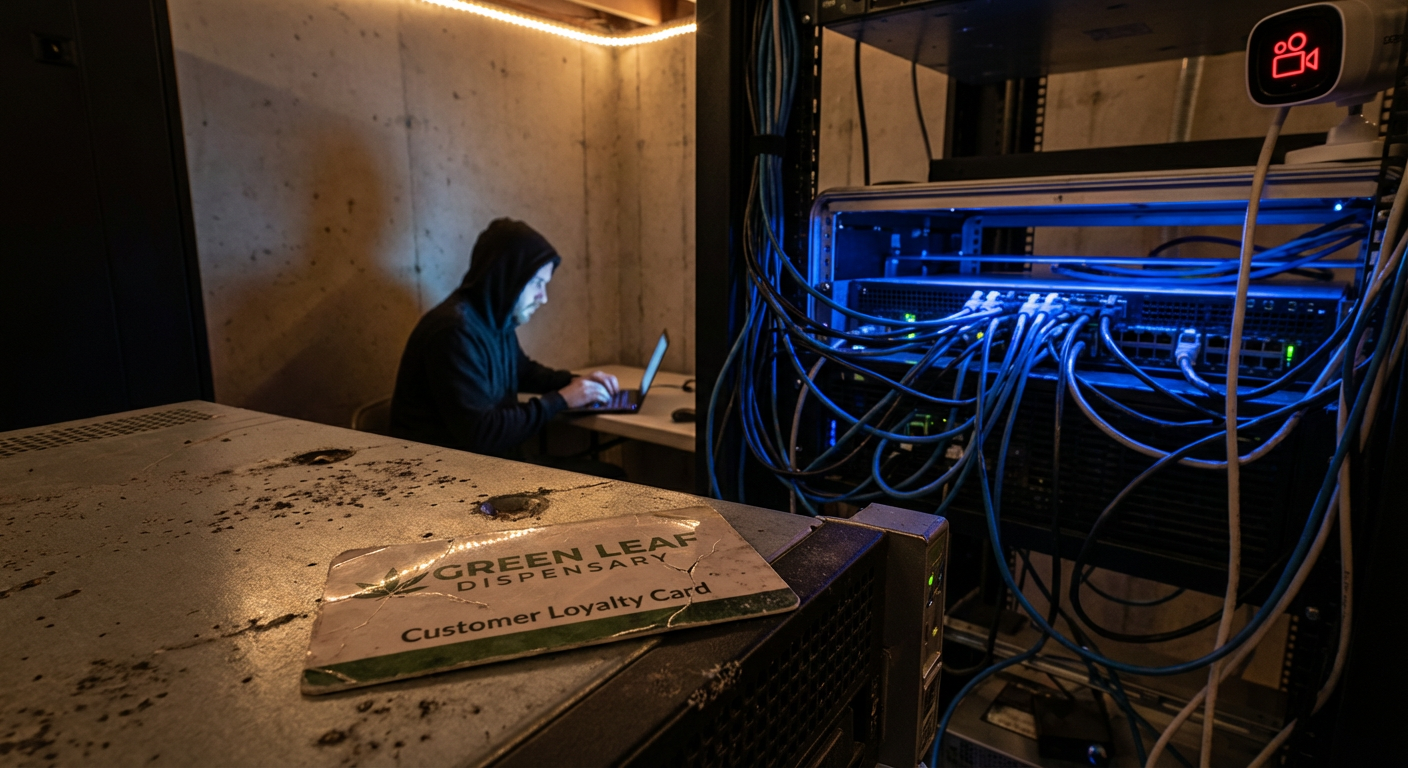
When ransomware hits a traditional retailer, they lose sales and reputation. When it hits a cannabis dispensary, they also lose their ability to report to METRC—which means they may lose their license. That’s why ransomware in cannabis isn’t just an IT problem. It’s an existential threat.
The first quarter of 2026 continued a pattern that should alarm every cannabis operator in the country: ransomware groups are deliberately targeting cannabis businesses, they’re getting in through predictable vulnerabilities, and the costs—financial, operational, and regulatory—are devastating.
Here’s what happened, what it means, and what you need to do.
The Cost Is Getting Worse
The average ransomware incident now costs $4.6 million when all factors are accounted for: ransom payment (for those who pay), incident response and forensics, system restoration, lost revenue during downtime, regulatory penalties, and legal fees. For many cannabis businesses operating on thin margins after 280E-era taxation, that number isn’t survivable.
Cannabis operations face a specific cost amplifier that other industries don’t: compliance downtime. Every state with a legal cannabis market requires real-time or near-real-time reporting to seed-to-sale tracking systems like METRC, BioTrack, or state-specific platforms. When ransomware encrypts your systems—including the integration between your POS and your compliance reporting—you can’t sell cannabis legally.
One Colorado dispensary chain lost three weeks of sales when ransomware encrypted their inventory management system. Beyond the revenue loss, they accrued compliance violations during the downtime period because they couldn’t provide the required real-time transaction data to the state. The regulatory fallout added legal costs and threatened their license renewal.
This is the cannabis-specific ransomware multiplier: the compliance system that exists to protect consumers becomes a second attack vector against your business when it goes down.
What Q1 2026 Attacks Had in Common
Analyzing the pattern of ransomware incidents affecting cannabis businesses in the first quarter of 2026, several common elements emerge consistently across unrelated attacks:
Entry Point 1: Unpatched Remote Access
The most common initial access vector in cannabis ransomware incidents remains unpatched or misconfigured remote access software—specifically, remote desktop protocol (RDP) and VPN appliances. Many dispensaries and cannabis operations stand up RDP to allow IT staff, managers, or POS vendors to access systems remotely. When those systems aren’t patched, aren’t behind multi-factor authentication, or use weak credentials, they’re effectively open doors.
Ransomware groups run automated scanners that continuously probe the internet for exposed RDP ports and known-vulnerable VPN appliances. A cannabis operation with an unpatched Cisco ASA or Fortinet VPN is identifiable within hours of the vulnerability being published. Attackers don’t need to know it’s a cannabis business specifically—they find the vulnerability first, then assess the value of what’s inside.
Entry Point 2: Phishing That Delivered the Loader
In cases where remote access wasn’t the initial vector, phishing emails delivering malware loaders were the next most common entry point. Unlike the immediate “click and you’re encrypted” ransomware of a decade ago, modern ransomware operations use multi-stage attacks:
- Phishing email delivers a loader (malware that runs silently)
- Loader establishes persistence and begins reconnaissance
- Attacker reviews what’s on the network and determines the value
- Ransomware is deployed strategically—targeting backup systems first, then primary systems
This means there’s often a gap of weeks to months between initial compromise and the ransomware detonation event. During that window, attackers are often exfiltrating data—which is why modern ransomware attacks involve a double extortion: your data is both encrypted and threatened for public release.
Entry Point 3: Third-Party Vendor Access
Several incidents in Q1 2026 involved attackers gaining access not directly to the dispensary’s systems, but through a vendor with legitimate access—a POS company, a managed IT service provider, or a software vendor with a support connection. Attackers compromise the vendor, then pivot through their legitimate access to reach dispensary systems.
This is particularly insidious because the access used is authorized. There are no failed login alerts. The vendor’s credentials are valid. By the time the dispensary knows something is wrong, the attacker has been inside for weeks.
The Backup Problem
The single most important defensive control against ransomware is functioning backups that are isolated from your primary systems. The bad news: most cannabis operations don’t have them configured correctly.
Common backup failures that make ransomware recovery far harder than it should be:
Backups on the same network: If your backup drive is connected to the same network as your primary systems, ransomware will encrypt both. An air-gapped or offline backup is the only reliable protection.
Backups not tested: Having a backup is not the same as having a recovery capability. When was the last time your team actually restored from backup to verify it works? Operators who never test their backups often discover at the worst possible moment that the backup is corrupted, incomplete, or covers only part of the affected systems.
No backup of compliance-critical data separately: Your METRC integration logs, compliance reports, and transaction records need a separate, specifically protected backup cadence. In the event of a ransomware incident, regulators will want to see that this data was preserved and that you can reconstruct your compliance record.
Cloud backups connected to compromised accounts: If your cloud backup account (AWS S3, Azure Blob, etc.) is accessible from the same credentials as your primary systems, sophisticated attackers will delete or encrypt cloud backups before triggering the ransomware. Cloud backups need to be protected with separate credentials and immutability settings.
The METRC Continuity Problem Almost No One Has Solved
Here is a scenario every cannabis operator needs to game out before ransomware hits them:
Your dispensary systems are encrypted at 2 AM on a Saturday. Your POS is offline. Your METRC integration is broken. Your inventory management system is inaccessible. State law requires you to report every transaction to METRC in real time. What do you do?
Most operators have no answer to this question. They’ve never written a METRC continuity procedure. They’ve never tested manual transaction entry into METRC as a fallback. They don’t know how long the state allows before compliance violations accrue.
The dispensaries that came through Q1 2026 ransomware incidents with their licenses intact had one thing in common: they had a METRC downtime procedure that included:
- The state’s specific grace period for downtime reporting (varies by state—typically 24 to 72 hours)
- Manual transaction log templates for recording sales during system outage
- Designated staff responsible for manual METRC entry once systems are restored
- The phone number and contact procedure for notifying state regulators proactively
Proactive notification to regulators before they discover your compliance gap is dramatically better than being found out. Regulators universally treat dispensaries that self-report downtime incidents better than those who appear to have hidden the lapse.
Should You Pay the Ransom?
The short answer: it’s rarely the right decision, and it’s getting worse.
Paying doesn’t guarantee recovery. In 2025, approximately 27% of organizations that paid a ransom did not receive a working decryption key, or the decryption process was so slow and incomplete that they had to restore from backup anyway.
Payment may violate sanctions law. The U.S. Treasury’s OFAC has designated several ransomware groups and their associated cryptocurrency wallets. Paying a ransom to a designated group is a potential sanctions violation—regardless of whether you knew who you were paying.
It funds the next attack. Ransomware groups track which industries pay reliably. Cannabis has been developing a reputation as a payer, which is increasing targeting.
Data is often leaked anyway. Many ransomware groups exfiltrate customer data before encrypting systems. Paying for decryption doesn’t stop data publication—that’s a separate negotiation with groups that now routinely run both extortions simultaneously.
The better path: invest in backup and recovery capability before an incident so that recovery from backup is a viable option that doesn’t cost you weeks of downtime.
Your Ransomware Readiness Checklist
Use this to assess your current exposure:
Access Controls
- RDP is disabled or not accessible from the internet without a VPN
- VPN appliances are patched to current versions
- All remote access requires multi-factor authentication
- Vendor/third-party access is limited to specific systems, time-limited, and logged
- Admin accounts are separate from everyday user accounts
Backups
- Backups run at least daily
- At least one backup copy is offline or air-gapped (not connected to your network)
- Cloud backups use immutable storage with separate credentials
- Backups have been tested for restoration within the last 90 days
- Compliance-critical data (METRC, transaction records) is backed up separately
Detection
- Endpoint detection and response (EDR) software is installed on all systems
- Security alerts are monitored (by in-house staff or an MSP with 24/7 coverage)
- Unusual outbound data transfer would trigger an alert
Response Planning
- You have a written incident response plan
- The plan includes a METRC downtime procedure
- You have the contact information for a cybersecurity incident response firm you can call immediately
- You know which law enforcement agencies to notify (FBI, state AG, state cannabis regulator)
- Your cyber insurance policy covers ransomware incidents (review your policy)
Staff Awareness
- All staff have received phishing awareness training in the last 12 months
- Employees know how to report suspicious activity
- A manager can answer “what do we do if systems go down” without looking up an answer
If you can’t check ten or more of those boxes, you have work to do before the next wave of attacks finds your operation.
Getting Help When It Happens
If ransomware hits your dispensary, the first call should be to a cybersecurity incident response firm—not to your IT vendor, not to your POS support line, and not to the attacker. Incident response firms have forensics capabilities, ransomware negotiation expertise, and established relationships with law enforcement that dramatically improve outcomes.
The FBI’s Internet Crime Complaint Center (IC3) accepts ransomware reports and can sometimes provide decryption keys if the specific ransomware variant has been solved by law enforcement. Report there regardless of outcome.
Notify your state cannabis regulator proactively. Early notification typically results in better regulatory treatment than being found out.
And then: use the incident as the forcing function to fix the gaps that enabled it. Every ransomware victim who survives it has an opportunity to become significantly harder to hit than they were before. Most don’t take it.
Don’t be one of those operators.
CannaSecure provides ransomware readiness assessments, incident response retainer services, and METRC continuity planning for cannabis operators. Contact us to schedule a readiness review before you need it.