The 24-Hour Notice That Changes Everything
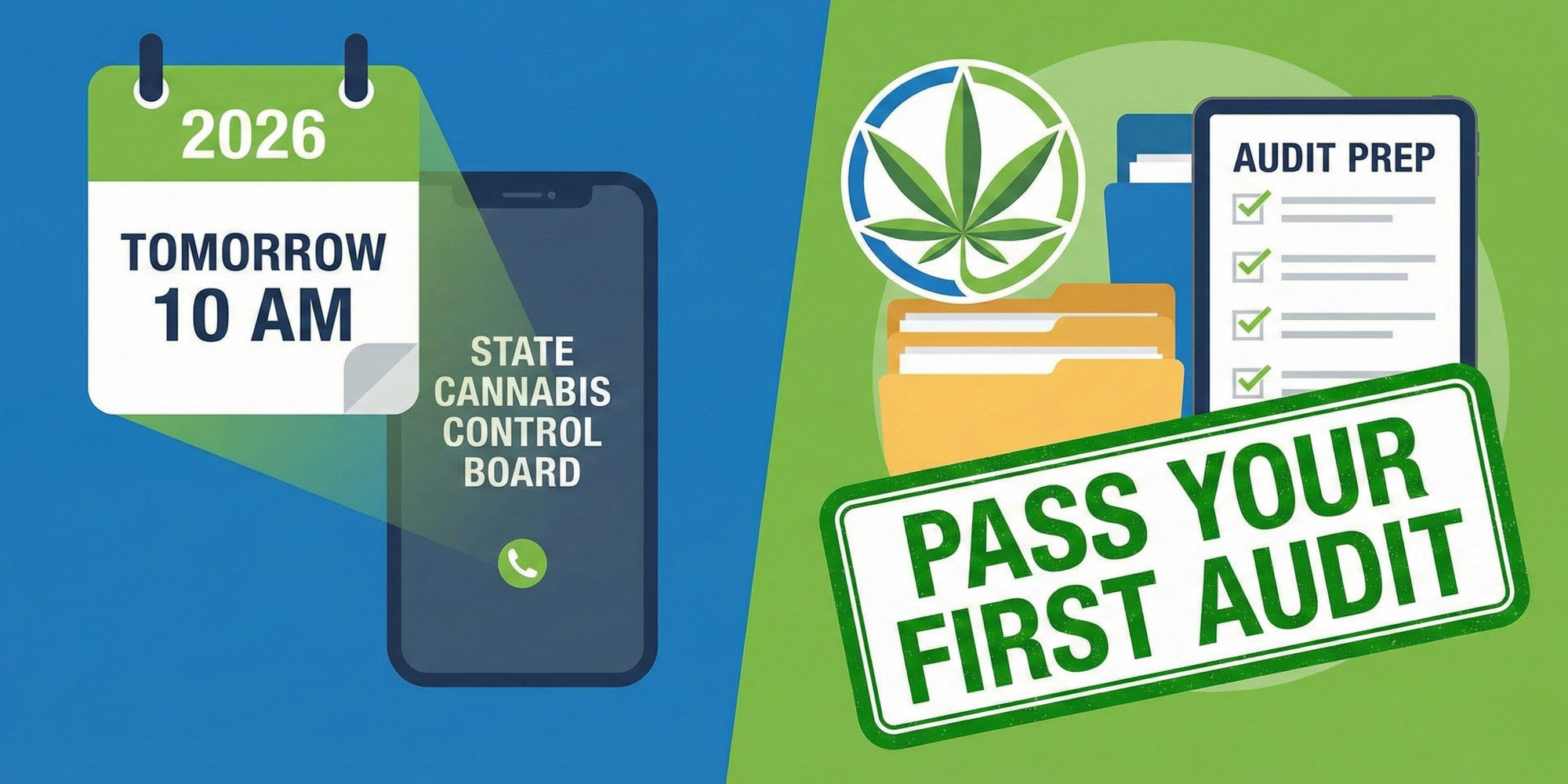
It’s Tuesday at 3:47 PM. Your phone rings. It’s a number you don’t recognize, but the area code matches your state cannabis regulatory agency.
“This is [State Cannabis Control Board]. We’re scheduling a compliance inspection of your dispensary for tomorrow at 10 AM. Please have all required documentation ready for review.”
Your heart rate spikes. Tomorrow. 10 AM. That’s less than 19 hours away.
Do you know where your employee training certificates are? When was the last time you reconciled Metrc? Are your security camera retention logs up to date? Is your vault combination documented? Do your waste disposal records match state requirements?
This isn’t a hypothetical. This is exactly how most cannabis compliance audits happen in 2026.
Michigan switched to unannounced inspections. Illinois increased inspection frequency 40%. California issued more violations for paperwork than any other category. Across all states, regulators are tightening enforcement, expanding inspection scope, and reducing tolerance for “minor” violations.
The stakes: License suspension. Product embargo. Fines of $500-$5,000 per violation (with 20+ violations possible in a single audit). Mandatory corrective action plans. Increased future inspection frequency. In worst cases: License revocation.
But here’s the good news: Cannabis audits are predictable. Inspectors follow checklists. They look for the same things in every state. The violations are consistent. If you know what they’re checking, you can prepare.
This guide will walk you through everything inspectors look for, how to prepare for your first audit, and—most importantly—how to pass.
 Canna SecureCannaSecure
What’s Changed in Cannabis Audits (2026)
Before we dive into preparation, understand the enforcement landscape you’re entering:
1. Shift to Unannounced Inspections
Old model (pre-2024): Most states gave 24-72 hours notice New model (2026): Increasing states adopt “walk-in” inspections with zero notice
States with unannounced inspections:
- Michigan (fully transitioned 2025)
- California (for follow-up/complaint investigations)
- Oregon (spot checks)
- New Jersey (random compliance verification)
- New York (increased unannounced frequency)
What this means: You can’t “audit prep” the day before anymore. Your operation needs to be audit-ready every single day.
2. Data Integrity is Priority #1
2026 enforcement focus: Seed-to-sale tracking accuracy
Regulators are laser-focused on Metrc/BioTrack discrepancies. Even 1% variance between physical inventory and digital records triggers deeper investigation.
Common violations:
- Inventory counts don’t match Metrc
- Waste logs incomplete or inaccurate
- Transfer manifests show discrepancies
- Adjustment irregularities (unexplained inventory changes)
- Reconciliation reports not conducted daily
Why: Data integrity violations suggest potential diversion (illegal sales outside regulated system) or loss of product control—both major red flags.
3. Documentation is No Longer Optional
The new standard: If it’s not documented, it didn’t happen.
Inspectors now ask for documented proof of everything:
- “Show me your employee training certificates”
- “Where are your waste destruction logs?”
- “Can I see your security system maintenance records?”
- “Do you have SOPs for cash handling?”
States issuing most violations for documentation failures:
- California
- Illinois
- Massachusetts
- New Jersey
- Colorado
4. Cybersecurity Added to Inspection Scope
New in 2026: Illinois, New Jersey, and Massachusetts now include documented information security policies in compliance requirements.
What inspectors check:
- Do you have written cybersecurity policies?
- Are employee credentials protected (no shared passwords)?
- Is customer data encrypted?
- Do you have an incident response plan?
- Have employees received security training?
Trend: Expect more states to add cybersecurity requirements as data breaches increase.
5. Environmental Compliance Gaining Attention
California leads the way, but expect other states to follow:
- Water usage documentation
- Energy consumption reporting (cultivation)
- Waste disposal environmental permits
- HVAC efficiency requirements
Cultivation facilities face increasing scrutiny on environmental stewardship.
6. Workforce Compliance Under Microscope
HR/labor violations are “easy targets” for inspectors:
- Expired employee badges/licenses
- Incomplete personnel files
- Missing background checks
- Wage/hour violations (unpaid breaks, overtime miscalculations)
- Worker misclassification (1099 vs. W-2)
States actively targeting cannabis for labor violations:
- New York
- California
- New Jersey
- Connecticut
Why: Labor violations are easy to find and generate immediate fines.
What Inspectors Actually Check (By Category)
Let’s break down exactly what regulators inspect, what they’re looking for, and what triggers violations:
Category 1: Licensing & Permits
What they check:
- Current license displayed (required in all states)
- License matches business name and location
- All employees have current agent/employee badges
- Local permits (zoning, business license, health permits)
- Renewal status (license not expired or in grace period)
Common violations:
- ❌ License not visible to public
- ❌ Employee working without valid agent card
- ❌ License expired (even by 1 day)
- ❌ Business operating under different name than licensed
- ❌ Local permits not obtained
How to prepare:
- ✅ License prominently displayed at entrance
- ✅ Digital copies of all licenses/permits in audit folder
- ✅ Employee badge roster with expiration dates
- ✅ Calendar reminders for renewals (90 days, 30 days, 7 days before expiration)
- ✅ Backup copy of license (in case displayed copy damaged)
Inspector question: “Can I see your current license and all employee agent cards?”
Category 2: Age Verification & Purchase Limits
What they check:
- ID checking procedures
- Age gate signage (“21+” or “18+ medical”)
- POS system enforces purchase limits
- Transaction logs show age verification
- Underage sale prevention training
 cannabisrisk.diy
- ❌ No ID check performed (inspectors use decoys)
- ❌ Expired ID accepted
- ❌ Purchase limits not enforced (customer bought over daily limit)
- ❌ No visible age requirement signage
- ❌ Employees can’t articulate ID checking policy
How to prepare:
- ✅ “ID Required” signs at entrance and register
- ✅ POS system flags underage birthdates automatically
- ✅ POS enforces state purchase limits
- ✅ Employee training on ID verification (with documentation)
- ✅ Test purchases logged (record every transaction includes birthdate verification)
Inspector test: “Show me how you verify a customer is old enough to purchase.”
Category 3: Seed-to-Sale Tracking (Metrc/BioTrack)
What they check (this is THE big one):
- Physical inventory matches digital records
- All packages have valid Metrc tags
- Waste properly documented and destroyed
- Transfers manifested correctly
- Daily reconciliation conducted
- No unexplained inventory adjustments
Common violations:
- ❌ Inventory discrepancies >1% (physical vs. Metrc)
- ❌ Untagged product found on premises
- ❌ Waste logs incomplete or show no disposal
- ❌ Transfer manifests don’t match received product
- ❌ “Lost” inventory without documentation
- ❌ Adjustments made without explanation/supervisor approval
How to prepare:
- ✅ Daily cycle counts (different product categories each day)
- ✅ Weekly full physical inventory
- ✅ Photo documentation of waste destruction
- ✅ Waste logs with witness signatures
- ✅ Manifest verification procedure (driver + receiving employee both sign)
- ✅ Adjustment approval workflow (manager must approve all Metrc adjustments)
Inspector action: Randomly selects 10-20 products, asks you to physically show them while comparing to Metrc
Failure scenario: You claim 50 units of Product X in Metrc. Inspector counts physical inventory, finds 47 units. That’s a 3-unit discrepancy = violation.
Category 4: Security & Surveillance
What they check:
- 24/7 camera coverage (all required areas)
- Video retention meets state minimum (40-90 days depending on state)
- Cameras functioning (not broken, blocked, or disconnected)
- Footage retrievable (can inspector view specific date/time?)
- Secure storage (vault, safes meet specifications)
- Alarm system operational
- Visitor logs (who entered restricted areas, when?)
Common violations:
- ❌ Camera not recording (hardware failure)
- ❌ Blind spots in coverage (area not monitored)
- ❌ Retention period insufficient (Michigan requires 90 days; you have 60)
- ❌ Footage not retrievable (system doesn’t allow date search)
- ❌ Vault left unsecured (inspector arrives, vault door open)
- ❌ Alarm not tested (can’t prove system works)
- ❌ No visitor log (inspector enters restricted area, no sign-in sheet)
How to prepare:
- ✅ Weekly camera functionality test (check all cameras recording)
- ✅ Monthly footage retrieval test (select random date, verify you can pull video)
- ✅ Storage capacity monitoring (don’t run out of retention space)
- ✅ Visitor log at entrance to all restricted areas
- ✅ Vault/safe procedures documented and followed
- ✅ Alarm test log (quarterly tests with certificate from monitoring company)
Inspector test: “Show me camera footage from [7 days ago, specific time].”
State-specific requirements:
- Pennsylvania: 4-year retention (most stringent)
- Massachusetts: 90-day retention + annual third-party security audits
- New York: Perimeter alarms with dual notification
- Florida: Multi-employee staffing during operations (can’t be alone with vault open)
Category 5: Product Testing, Labeling & Packaging
What they check:
- All products have COA (Certificate of Analysis) from licensed lab
- Labels include required information (THC/CBD content, warnings, batch number)
- Packaging is child-resistant
- Exit bags provided (if state requires)
- No products sold past expiration/use-by date
Common violations:
- ❌ Product on shelf without COA
- ❌ Label missing required warnings (“Keep out of reach of children”)
- ❌ THC content not listed or incorrect
- ❌ Packaging not child-resistant
- ❌ Exit bag not child-resistant (states requiring double packaging)
- ❌ Expired product still available for sale
How to prepare:
- ✅ COA filing system (organized by batch number, easily retrievable)
- ✅ Label compliance checklist (verify all required elements present)
- ✅ Product expiration tracking (remove products 30 days before expiration)
- ✅ Packaging audit (verify child-resistance of all containers)
- ✅ Exit bag supply (always stocked, verify child-resistance certification)
Inspector question: “Show me the COA for this product on your shelf.”
Category 6: Waste Management & Disposal
What they check:
- Waste tracked in seed-to-sale system
- Waste stored securely (can’t be accessed/stolen)
- Destruction documented (photos, witness signatures, video)
- Waste rendered unusable (mixed with non-cannabis material per state requirements)
- Disposal company licensed (if using third-party)
Common violations:
- ❌ Waste not logged in Metrc
- ❌ Cannabis waste not rendered unusable (still recognizable as cannabis)
- ❌ No photo/video documentation of destruction
- ❌ Waste destruction not witnessed (only one person present)
- ❌ Waste stored in unsecured area
- ❌ Using unlicensed disposal company
How to prepare:
- ✅ Waste destruction SOP (written procedure)
- ✅ Destruction witnessed by two employees (both sign log)
- ✅ Photo/video documentation (before destruction, during mixing, after)
- ✅ Waste mixed with required materials (check state requirements: kitty litter, dirt, grease, etc.)
- ✅ Metrc waste manifest created before destruction
- ✅ Disposal company license on file (if using third-party)
Inspector request: “Show me your waste disposal logs for the last 30 days.”
Category 7: Employee Training & Records
What they check:
- All employees completed required training (RVT - Responsible Vendor Training)
- Training certificates current (most states require renewal annually or biannually)
- New hire onboarding documented
- Safety training completed (OSHA)
- Personnel files complete (I-9, W-4, background checks)
Common violations:
- ❌ Employee working without valid RVT certificate
- ❌ Training expired (even by 1 week)
- ❌ No documentation of onboarding
- ❌ Incomplete personnel files (missing I-9, background check)
- ❌ Employee can’t articulate basic compliance requirements when questioned
How to prepare:
- ✅ Training certificate database (digital copies, expiration tracking)
- ✅ 90-day renewal reminders (don’t let certificates expire)
- ✅ Onboarding checklist (document what new hires were trained on)
- ✅ Personnel file audit (quarterly review for completeness)
- ✅ Pop quiz employees randomly (“What’s our state’s daily purchase limit?”)
Inspector question: “Can I see [specific employee]‘s training certificates?”
2026 trend: Inspectors are increasingly interviewing employees to verify they understand compliance requirements, not just checking if certificates exist.
Category 8: Standard Operating Procedures (SOPs)
What they check:
- Written SOPs exist for key operations
- SOPs accessible to employees (not locked in manager’s office)
- SOPs match actual practices
- SOPs address state-specific requirements
Key SOPs inspectors request:
- Cash handling procedures
- Inventory reconciliation process
- Waste disposal procedure
- Opening/closing procedures
- Emergency response plan
- Customer complaints handling
- Product recall procedure
Common violations:
- ❌ No SOPs documented
- ❌ SOPs exist but employees don’t know where they are
- ❌ SOPs don’t match actual practice (say one thing, do another)
- ❌ SOPs generic (not adapted to your specific operation)
How to prepare:
- ✅ SOP binder accessible in work areas
- ✅ Digital copies available to all employees
- ✅ Annual SOP review (update to reflect current practices)
- ✅ Train employees on SOPs (document training)
- ✅ Audit compliance (do you actually follow your own SOPs?)
Inspector test: “Walk me through your opening procedure” (then compares to written SOP)
Category 9: Financial & Operational Records
What they check:
- Sales records match reported revenue
- Cash handling procedures documented and followed
- Daily reconciliation logs
- Banking/armored car documentation (if applicable)
- Purchase limits enforced (transaction history)
Common violations:
- ❌ Cash discrepancies (drawer count doesn’t match POS)
- ❌ No daily reconciliation performed
- ❌ Purchase limits exceeded (customer bought over limit, system didn’t stop)
- ❌ Sales to same customer multiple times/day to circumvent limits
How to prepare:
- ✅ Daily cash reconciliation (manager-signed logs)
- ✅ Dual-count procedures (two employees count cash together)
- ✅ POS configured with state purchase limits
- ✅ Customer transaction history reviewable
- ✅ Cash handling SOP documented
Inspector audit: Reviews sales records for last 30 days, looks for patterns suggesting limit violations
The 30-Day Audit Preparation Plan
Can’t start preparing the day before anymore—but 30 days of focused work will get you audit-ready:
Week 1: Documentation Audit
Day 1-2: Licensing & Employee Records
- Verify business license current and displayed
- Check all employee agent cards not expired
- Audit personnel files (complete I-9, W-4, background checks)
- Verify all training certificates current
- Create renewal calendar (upcoming expirations)
Day 3-4: SOPs & Policies
- Gather all SOPs (identify missing ones)
- Review SOPs for accuracy (match current practices?)
- Update outdated SOPs
- Ensure SOPs accessible to staff
- Document SOP locations
Day 5-7: Metrc/BioTrack Audit
- Full physical inventory count
- Compare to Metrc/BioTrack records
- Investigate all discrepancies
- Correct errors in system
- Document reconciliation process
Week 2: Security & Facility
Day 8-9: Camera & Surveillance
- Test all cameras (verify recording)
- Check footage retention (meets state minimum?)
- Verify footage retrievable (test playback)
- Identify blind spots
- Document camera locations/coverage
Day 10-11: Alarm & Access Control
- Test alarm system
- Verify monitoring company contact
- Review access logs
- Audit badge access (terminated employees removed?)
- Test panic buttons
Day 12-14: Physical Security
- Vault/safe procedures documented?
- Combination security (not written down?)
- Visitor logs in place?
- Restricted area signage clear?
- Emergency exits unobstructed?
Week 3: Product & Waste Compliance
Day 15-17: Product Compliance
- Verify all products have COAs
- Audit labels (all required info present?)
- Check packaging (child-resistant?)
- Remove expired products
- Verify exit bags compliant
Day 18-19: Waste Management
- Review waste logs (last 90 days)
- Verify waste destruction documented
- Check Metrc waste manifests
- Audit waste storage security
- Verify disposal company licensed
Day 20-21: Inventory Processes
- Document cycle count procedures
- Verify daily reconciliation happening
- Audit transfer manifests
- Review adjustment logs
- Test inventory audit SOP
Week 4: Training & Final Prep
Day 22-23: Employee Training
- Conduct compliance refresher training
- Quiz employees on key requirements
- Review emergency procedures
- Practice inspector interactions
- Document training session
Day 24-25: Mock Audit
- Conduct internal audit (use inspector’s perspective)
- Identify gaps/weaknesses
- Create remediation list
- Fix critical issues immediately
Day 26-28: Remediation
- Address all identified gaps
- Update documentation where needed
- Re-test failed areas
- Verify fixes effective
Day 29-30: Final Review
- Management walkthrough
- Verify audit folder complete
- Confirm all staff aware of procedures
- Final facility inspection
- Celebrate being audit-ready!
State-Specific Audit Checklists
Different states = different priorities. Here’s what each state focuses on:
California (Department of Cannabis Control)
Top violations:
- Metrc discrepancies (inventory doesn’t match system)
- Missing COAs (products without lab results)
- Packaging/labeling non-compliance
- Security camera retention insufficient
- Expired employee licenses
California-specific requirements:
- Annual track-and-trace fee paid
- Child-resistant packaging + exit bag
- Warning labels in English and Spanish (if serving Spanish-speaking customers)
- Delivery documentation (if offering delivery)
- Equity program compliance (if in equity program)
Audit frequency: Risk-based (violators get more frequent inspections)
Michigan (Cannabis Regulatory Agency)
Top violations:
- Inventory tracking errors
- Security violations (camera coverage, retention)
- Employee badge issues
- Waste disposal documentation
- Purchase limit violations
Michigan-specific requirements:
- Unannounced inspections (no 24-hour notice)
- 90-day video retention
- Real-time Metrc updates (POS must integrate)
- Patient/caregiver verification for medical
Audit frequency: Unannounced spot checks (unpredictable)
Colorado (Marijuana Enforcement Division)
Top violations:
- Video surveillance gaps
- Manifest errors (transfers)
- Inventory discrepancies
- Restricted access violations
- Employee training lapses
Colorado-specific requirements:
- Transport manifests strictly enforced
- Restricted access area monitoring
- Cash handling procedures
- Local jurisdiction compliance (city/county rules)
Audit frequency: Annual scheduled + complaint-driven
Illinois (Department of Financial & Professional Regulation)
Top violations:
- Security plan non-compliance
- Agent identification cards
- Inventory tracking
- Cash handling violations
- Cybersecurity policy missing (new requirement)
Illinois-specific requirements:
- Documented cybersecurity policies
- Integration with state tracking system
- Social equity compliance (if applicable)
- Agent background check verification
Audit frequency: Increased in 2026 (40% more inspections)
New Jersey (Cannabis Regulatory Commission)
Top violations:
- Employee licensing issues
- Inventory discrepancies
- Security system failures
- Waste disposal violations
- Age verification failures
New Jersey-specific requirements:
- Dual-notification alarm systems
- Cannabis handler training certification
- Diversity plan compliance
- Municipal approval documentation
Audit frequency: Quarterly for new licensees, annual for established
Massachusetts (Cannabis Control Commission)
Top violations:
- Security audit not completed
- Video retention insufficient
- Inventory variance
- Training certificate lapses
- Packaging violations
Massachusetts-specific requirements:
- Annual third-party security audit (unique requirement)
- 90-day video retention
- Biometric access control
- Diversity/inclusion plan
Audit frequency: Semi-annual plus third-party security audit
New York (Office of Cannabis Management)
Top violations:
- Employee licensing
- Inventory tracking
- Security deficiencies
- Packaging/labeling
- Record retention
New York-specific requirements:
- Perimeter alarm with dual notification
- Real-time inventory tracking
- Social equity compliance
- Conditional Adult-Use Retail Dispensary (CAURD) specific rules
Audit frequency: New licensees face increased scrutiny (quarterly first year)
During The Audit: What To Do (And Not Do)
Inspectors arrive. Here’s how to handle the next 2-4 hours:
DO:
✅ Be cooperative and professional Inspectors appreciate businesses that make their job easier. Friendly, organized operators get the benefit of the doubt.
✅ Designate a point person One person (owner, GM, compliance officer) handles inspector interactions. Don’t have 3 employees all trying to answer questions.
✅ Have your “audit folder” ready Digital or physical folder with:
- Business license
- Employee agent cards
- Training certificates
- SOPs
- Security system documentation
- Metrc reconciliation reports
- Waste logs
- COA index
✅ Answer questions directly Inspector asks “Where are your waste logs?” → Show them immediately. Don’t over-explain or get defensive.
✅ Take notes Document what inspector looks at, questions asked, concerns raised. This helps if you need to appeal violations later.
✅ Ask for clarification If you don’t understand a violation, ask inspector to explain. Better to understand now than get surprised by report.
✅ Fix minor issues immediately If inspector points out something small (sign not visible, document misfiled), fix it on the spot if possible.
DON’T:
❌ Don’t volunteer information Answer questions asked. Don’t proactively say “Oh, we had an issue with Metrc last month…” unless directly asked.
❌ Don’t argue with inspectors If you disagree with a finding, note it, but don’t fight during the inspection. Save disputes for official appeals process.
❌ Don’t lie or hide issues If inspector finds a discrepancy, acknowledge it. Lying makes everything worse and can upgrade violations.
❌ Don’t make promises you can’t keep Inspector says “Can you fix this by Friday?” Only say yes if you’re certain. Better to give realistic timeline.
❌ Don’t allow unsupervised inspector access Accompany inspector throughout facility. Don’t let them wander alone—not because you’re hiding something, but to answer questions in real-time.
❌ Don’t panic over minor violations Not every violation means license suspension. Minor violations often result in “Notice to Comply” rather than fines.
After The Audit: Violation Response
Inspector leaves. Now what?
Timeline:
Within 7-14 days: Receive inspection report (varies by state) Report includes:
- Violations found
- Severity level (minor/major)
- Required corrective actions
- Deadline for compliance
- Potential penalties
Response Options:
Option 1: Accept & Comply
Most common path. If violations are accurate:
- Create corrective action plan (written document)
- Document how you fixed each violation
- Provide evidence (photos, updated procedures, training records)
- Submit within deadline
- Request follow-up inspection (if required)
Option 2: Appeal
If you believe violation is incorrect:
- Review state appeal process (usually 10-30 days to file)
- Gather evidence (notes from inspection, documentation proving compliance)
- File formal appeal with regulatory agency
- Attend hearing (if granted)
- Receive ruling
Warning: Appeals take time. Don’t appeal minor violations just to delay—it increases regulatory scrutiny.
Option 3: Request Informal Conference
Many states allow informal discussion before formal appeal:
- Contact inspector or supervisor
- Present your evidence/concerns
- Negotiate resolution (may result in reduced violation or guidance to comply)
Penalty Mitigation:
Factors that reduce penalties:
- First-time offense
- Immediate corrective action
- Cooperation during inspection
- No pattern of violations
- Evidence of good faith effort
Factors that increase penalties:
- Repeat violations
- Lack of cooperation
- Falsified records
- Public health/safety risk
- Deliberate non-compliance
The Cost of Audit Failures
What happens if you fail an audit? Let’s be honest about consequences:
Minor Violations
Typical outcome: Notice to Comply
Examples:
- Sign not properly displayed
- Minor documentation gap
- Training certificate expired by <30 days
- Single inventory discrepancy <1%
Timeline: 30-60 days to correct Penalty: Usually no fine if corrected within deadline Follow-up: Documentation review (may not require on-site inspection)
Cost: $500-$2,000 (staff time to remediate + documentation)
Major Violations
Typical outcome: Fines + Corrective Action Plan
Examples:
- Significant Metrc discrepancies (>5%)
- Security system failures (cameras not recording)
- Multiple employee licensing issues
- Improper waste disposal
- Age verification failure
Timeline: 15-30 days to correct Penalty: $500-$5,000 per violation Follow-up: On-site re-inspection required
Cost: $5,000-$25,000 (fines + remediation + lost operating time)
Critical Violations
Typical outcome: Product Embargo + License Suspension Risk
Examples:
- Product sold without COA (health/safety risk)
- Cannabis sold to minors
- Product diversion (inventory unaccounted for)
- Operating without license
- Falsified records
Timeline: Immediate action required Penalty: $10,000+ in fines + potential criminal referral Follow-up: Emergency inspection + compliance monitoring
Cost: $50,000-$100,000+ (fines + legal fees + product loss + operational disruption)
License Revocation
Extreme cases only, but it happens:
Triggers:
- Repeated critical violations
- Evidence of illegal diversion
- Criminal activity on premises
- Complete failure to comply with corrective actions
- Operating after license suspension
Cost: Business closure (total loss)
The Audit-Ready Cannabis Operation
What does “audit-ready every day” actually look like?
Daily Habits
Every morning (opening):
- Count cash from vault (dual-count)
- Verify security system operational (cameras recording)
- Check Metrc for discrepancies
- Review employee schedule (all have valid badges?)
During operations:
- ID check every transaction
- Enforce purchase limits (POS prevents over-limits)
- Log all restricted area access (visitor log)
- Document any unusual events (system glitches, customer complaints)
Every evening (closing):
- Cash reconciliation (manager + employee count)
- Daily Metrc reconciliation (physical vs. system)
- Lock vault (dual-person procedure)
- Arm alarm system
- Document any discrepancies
Weekly Routines
Monday:
- Cycle count (10% of inventory—different products each week)
- Review security footage (spot-check for compliance)
- Verify all cameras recording
Wednesday:
- Audit training certificates (any expiring soon?)
- Review waste logs
- Check product expiration dates
Friday:
- Cash handling audit (compare week’s reconciliation logs)
- Review sales for purchase limit compliance
- SOPs reviewed for accuracy
Monthly Tasks
First week:
- Full physical inventory count
- Metrc reconciliation report (month-end)
- Security system test (alarm, cameras, panic buttons)
Second week:
- Personnel file audit (10 files/month rotation)
- Training certificates audit (upcoming renewals)
- COA audit (verify all products have current COAs)
Third week:
- Waste disposal audit (logs match Metrc)
- Packaging compliance check (child-resistant, labels correct)
- Visitor log review
Fourth week:
- SOP review (1-2 SOPs/month, ensure current)
- Mock audit (manager inspects as if inspector)
- Remediate any issues found
Quarterly Deep Dives
Q1: Documentation
- Full personnel file audit (all employees)
- All SOPs reviewed and updated
- All licenses/permits renewed
Q2: Security
- Third-party security audit (if state requires)
- Full camera system review
- Access control audit (badge list vs. current employees)
Q3: Inventory
- Comprehensive inventory audit (external accountant)
- Metrc data integrity review
- Transfer manifest accuracy audit
Q4: Compliance Training
- All-staff compliance refresher
- Quiz employees on key requirements
- Update training materials for regulatory changes
The CISO Marketplace Audit Prep Toolkit
You can’t pass audits with generic checklists. You need state-specific, cannabis-tailored compliance tools:
Audit Preparation Tools
- State-specific cannabis compliance policies
- SOPs for dispensary operations
- Employee handbook templates
- Audit-ready documentation
- 💰 Code:
CISO20- 20% OFF site-wide savings
- Complete dispensary compliance suite
- Regulatory change tracking (state-specific)
- Annual policy review automation
- Audit preparation guides 💰 Codes:
CISO30- 30% OFF for first-time buyers (expires 2026-12-31)CISO15- 15% OFF for CISO Marketplace members
- Individual compliance policy templates
- Cannabis security policies
- Per-policy purchases
- 💰 Code:
CISO20- 20% OFF per policy
Implementation & Training
- Cannabis compliance checklists
- Employee training materials
- Audit response templates
- SOP implementation guides 💰 Codes:
CISO30- 30% OFF first-time subscriptions (one-time use, expires 2026-12-31)CISO20- 20% OFF token packages forever
Assessment & Monitoring
- Compliance gap analysis
- Audit readiness assessment
- Ongoing compliance monitoring
- Regulatory change alerts
- 💰 Code:
CISO25- 25% OFF annual subscription
All available through CISO Marketplace:
**👉 **Explore the complete audit prep ecosystem → **👉 **View all active compliance deals →
Your Pre-Audit Checklist (Print & Use)
Use this as your final pre-audit walkthrough:
☐ Licenses & Permits
- Business license current and displayed
- All employee agent cards valid
- Local permits current (zoning, health, business)
- Digital copies in audit folder
☐ Employee Documentation
- All training certificates current (RVT)
- Personnel files complete (I-9, W-4, background checks)
- Onboarding documentation for all staff
- OSHA safety training completed
☐ Metrc/BioTrack
- Physical inventory matches system (<1% variance)
- All products tagged
- Daily reconciliation logs up to date
- Waste manifests complete
- Transfer manifests accurate
☐ Security & Surveillance
- All cameras recording
- Video retention meets state requirement
- Footage retrievable (test playback)
- Alarm system operational
- Vault/safe secured
- Visitor logs in place
☐ Products & Packaging
- All products have COAs
- Labels complete (THC content, warnings, batch number)
- Packaging child-resistant
- Exit bags available and compliant
- No expired products on shelves
☐ Waste Management
- Waste logs complete (last 90 days)
- Destruction documented (photos, signatures)
- Waste rendered unusable
- Metrc waste manifests created
- Disposal company licensed (if using third-party)
☐ Standard Operating Procedures
- All key SOPs documented
- SOPs accessible to staff
- SOPs match actual practices
- Staff trained on SOPs
☐ Financial Records
- Daily cash reconciliation logs
- Dual-count procedures followed
- Purchase limits enforced
- Sales records organized
The Uncomfortable Truth About Cannabis Audits
Here’s what nobody tells new cannabis operators:
You will get violations.
Not “might”—will.
Even the most compliant dispensaries receive findings. Why? Because cannabis regulations are extraordinarily complex, change frequently, and even well-intentioned operators miss things.
The difference between successful and failed businesses isn’t zero violations—it’s how you handle them.
The Operators Who Succeed:
They treat compliance as infrastructure, not an afterthought.
- Daily habits maintain audit-readiness
- Documentation is automatic, not scrambled
- Training is continuous, not crisis-driven
- Systems enforce compliance, not hoping employees remember
They don’t fear audits—they prepare for them.
- Mock audits quarterly
- Internal compliance reviews monthly
- External consultants annually
- Regulatory change monitoring constantly
They respond to violations professionally.
- Accept when they’re wrong
- Correct immediately
- Document thoroughly
- Appeal only when justified
The Operators Who Fail:
They treat compliance as a checkbox.
- “Pass the initial inspection, we’re good”
- Documentation happens week before renewal
- Training is “read this pamphlet, sign here”
- Systems? What systems?
They panic during audits.
- Can’t find documents
- Don’t know their own procedures
- Make excuses instead of fixing issues
- Argue with inspectors
They ignore violations until they compound.
- “We’ll fix it eventually”
- Multiple Notices to Comply become fines
- Fines become suspensions
- Suspensions become revocations
Which Operator Are You?
Here’s the decision point:
Option A: Keep doing what you’re doing. Hope you don’t get audited. If you do, scramble to fix everything the night before. Cross your fingers. Maybe you pass, maybe you don’t.
Option B: Invest 30 days now to become audit-ready. Build systems that maintain compliance daily. When inspectors arrive, you’re confident—not terrified.
Option A costs $0 upfront. Option B costs time and focus.
But when the audit comes?
Option A: $5,000-$25,000 in violations + weeks of remediation + increased future scrutiny
Option B: Pass with minor findings + professional reputation + continued operations
Do the math.
Join CannaSecure for Ongoing Compliance Support
This article gave you the framework—but cannabis regulations change constantly.
CannaSecure Dispensary Tier members get:
✅ State-specific audit checklists
- Updated within 48 hours of regulatory changes
- California, Michigan, Illinois, Colorado, Mass, NY, NJ, and more
✅ Monthly compliance briefings
- New enforcement priorities
- Recent violations analysis
- Regulatory changes decoded
✅ Audit preparation templates
- Pre-audit checklists
- Mock audit procedures
- Violation response templates
- Corrective action plan formats
✅ SOP library
- Cannabis-specific operational procedures
- State-compliant templates
- Customizable for your operation
✅ Private community + weekly Q&A
- Connect with compliant operators
- Ask auditors questions directly
- Share audit experiences and solutions
**👉 **Join CannaSecure Dispensary Tier - $99/month →
One avoided violation pays for 5+ years of membership. Actual license protection? Priceless.
Published January 14, 2026 | Updated January 14, 2026 © 2026 CannaSecure.tech | QSai LLC. All rights reserved.
                ## Sign up for Canna Secure

                Protecting Cannabis Businesses from Breaches & Audit Failures


                Subscribe


            .nc-loop-dots-4-24-icon-o{--animation-duration:0.8s}
            .nc-loop-dots-4-24-icon-o *{opacity:.4;transform:scale(.75);animation:nc-loop-dots-4-anim var(--animation-duration) infinite}
            .nc-loop-dots-4-24-icon-o :nth-child(1){transform-origin:4px 12px;animation-delay:-.3s;animation-delay:calc(var(--animation-duration)/-2.666)}
            .nc-loop-dots-4-24-icon-o :nth-child(2){transform-origin:12px 12px;animation-delay:-.15s;animation-delay:calc(var(--animation-duration)/-5.333)}
            .nc-loop-dots-4-24-icon-o :nth-child(3){transform-origin:20px 12px}
            @keyframes nc-loop-dots-4-anim{0%,100%{opacity:.4;transform:scale(.75)}50%{opacity:1;transform:scale(1)}}


            Email sent! Check your inbox to complete your signup.


                No spam. Unsubscribe anytime.