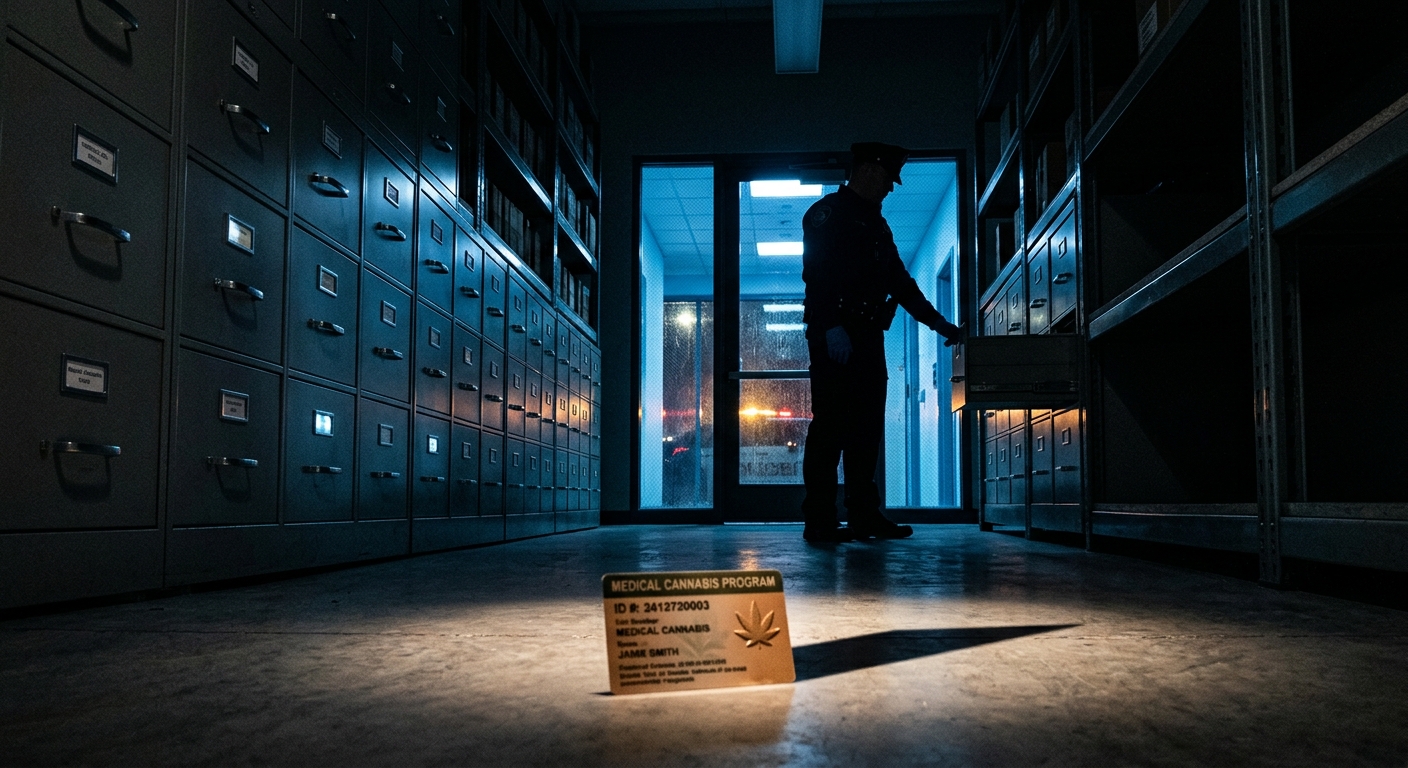
On August 8, 2026, the Senate passed a funding bill 90-6 that included language from the Hemp Planting Predictability Act, delaying most of the federal hemp ban from November 12 to December 11. The delay came with a carve-out: cannabinoids “not capable of being naturally produced by a Cannabis sativa L. plant” — delta-8, delta-10, HHC, and the rest of the converted and synthetic category — still come off the market on November 12, regardless.
So the industry now has two deadlines, thirty days apart, hitting different parts of the same shelf. The Senate Agriculture Committee failed to advance the Agricultural Act of 2026 on a 10-11 vote on August 6; the House’s Farm Bill left the underlying ban intact. Industry groups put roughly $28 billion in annual market value and 300,000+ jobs at stake.
We’ve covered the compliance cliff itself and what the ban does to product portfolios. This piece is about the part almost nobody is planning: what happens to the data when the businesses stop existing.
Closures Are a Data Event
A hemp retailer that closes in November leaves behind more than unsold inventory. It leaves behind:
- Customer databases — names, emails, phone numbers, addresses, purchase histories
- Age-verification records, and in many cases retained scans or photographs of driver’s licenses and passports
- Loyalty program profiles
- E-commerce accounts with stored payment tokens and shipping addresses
- Delivery and shipping manifests
- Employee records, including background check results
- Vendor and lab data, including COAs
- Surveillance footage
- Backups of all of the above, in cloud accounts whose billing is about to lapse
The mechanism of loss is mundane. A business shuts down. The founder stops paying the SaaS bills. The Shopify or WooCommerce instance goes dormant with data intact. The S3 bucket stays up because nobody remembers it exists. The laptop with the customer export goes home with someone. The cloud account gets reclaimed and reassigned. Six months later, a researcher finds an unauthenticated URL.
That is not hypothetical. It is precisely the pattern behind the Cannaleaks exposure of 985,000 cannabis club IDs, and the structural risk we described in regulatory whiplash and orphaned data after Thailand and Germany reversed course. The United States is about to run that experiment at a scale of thousands of businesses inside a thirty-day window.
The Legal Trap: Deletion Duties Don’t Die With the Business
The instinct — “we’re closing, so this stops being our problem” — is wrong in both directions.
Your obligations survive the closure. State privacy statutes now cover most of the country. Data subject deletion rights, breach notification duties, and reasonable-security obligations attach to the data controller, and dissolving an LLC does not automatically extinguish them, particularly where officers remain identifiable. A breach of a defunct company’s database still generates notification duties and still generates plaintiffs. The 23-state privacy landscape doesn’t have a going-out-of-business exemption.
But you can’t just delete everything either. Tax records, employment records, product liability exposure, pending disputes, chargeback windows, and any state-mandated sales record retention all impose keep-it obligations that outlast the sales floor. Deleting records you were required to preserve, right as a market shuts down under legal pressure, is its own category of problem.
The answer is not “delete everything” or “keep everything.” It’s a written wind-down plan that distinguishes the two, executed while you still have staff and system access.
The Wind-Down Plan
Start this now. Every step is easier in August than in the week you’re liquidating fixtures.
1. Inventory where the data is. Not where you think it is — where it actually is. POS, e-commerce platform, email marketing tool, SMS provider, loyalty vendor, delivery app, accounting system, HR platform, cloud storage, local machines, staff phones, and every backup. Most operators discover two or three systems they’d forgotten they were paying for.
2. Classify into three buckets.
- Must retain: tax, employment, mandated sales records, anything under litigation hold. Note the specific retention period and the specific authority for each.
- Must destroy: retained ID images and scans, biometric data, unnecessary loyalty detail, marketing profiles, anything you kept “just in case.” Retained identity documents are the single highest-liability item in the building — destroy them first, and destroy them before you’re distracted.
- Judgment call: customer contact records with no mandate and no immediate risk. Default to destruction.
3. Destroy the must-destroy bucket now, not at closing. There is no business reason to hold a passport scan on November 1 that you didn’t have on August 1. Do it while the people who know the systems are still employed.
4. Designate a records custodian in writing. One named person responsible for the must-retain set after closure, with a defined storage location, defined access control, an encryption requirement, and a calendar date on which the retention period expires and the data is destroyed. Put it in the dissolution paperwork. An unowned archive is an eventual breach.
5. Close accounts properly, in order. Export what you must retain, verify the export, request deletion from the vendor in writing (most contracts require it on termination), get written confirmation, then cancel the subscription. Cancelling first frequently leaves the data resident and unreachable — you’ve lost control without losing exposure.
6. Don’t sell the customer list. It will be offered. A hemp customer database collected under a hemp-era privacy notice, frequently including retained IDs, transferred to a licensed cannabis operator, is a liability transfer disguised as an asset sale — and in most states the original consent doesn’t cover it. Licensed operators tempted to buy: this is the fastest way to inherit somebody else’s breach. The M&A due-diligence failures already wrecking cannabis deals are mild by comparison.
7. Handle employee data with the same care. Background check results, I-9 documentation, and health plan records are all high-sensitivity and all routinely abandoned on a shared drive when a company folds.
8. If you’re converting rather than closing, don’t carry the old data across. Operators moving from hemp into licensed cannabis, or into compliant sub-0.4mg products, should start the customer database clean with fresh notice and consent. The temptation to migrate everything is exactly how a compliance reset becomes a legacy liability.
What Licensed Operators Should Do
The ban reshapes the licensed channel too.
Expect a Q4 demand spike as hemp customers migrate into dispensaries. Plan staffing, cash handling, and — critically — don’t launch new customer-data channels during the surge.
Refuse orphaned data. If a closing hemp business offers you their list, their loyalty database, or their “verified customer” records, decline in writing.
Watch the December 11 date carefully. The delay is attached to a funding vehicle. Funding vehicles move. Build your plan against November 12 for synthetics and treat December 11 as a date that could shift again — an operations plan that only works if Congress behaves predictably is not a plan.
Document your own hemp-adjacent SKUs now. If you carry anything in the converted-cannabinoid category, your COA and batch provenance for those products is about to matter a great deal, in exactly the way North Carolina’s odor rulings illustrate: when a product’s legality turns on chemistry, the paperwork is the case.
Bottom Line
A market-wide shutdown is a data-destruction event that nobody has budgeted for. Thousands of businesses will close in a thirty-day window while holding some of the most sensitive consumer records in American retail — identity documents tied to cannabinoid purchases — and the default outcome is that those records sit in unpaid cloud accounts until someone finds them.
The wind-down plan is a two-page document and a week of work. It protects customers who did nothing but buy a legal product, it protects owners from liability that survives their LLC, and it costs almost nothing to do in August.
The alternative is that the largest cannabis privacy incident of 2027 is caused by a business that stopped existing in 2026.
Deadline mechanics from Senate passage of the August 8, 2026 funding bill including Hemp Planting Predictability Act language, and contemporaneous analysis of the November 12 synthetic-cannabinoid carve-out.